

Expertise
You don’t have to navigate this alone. We’re here to help you make informed, confident decisions for you and your whānau.

Day to day care and contact
What used to be called custody and access is now day to day care and contact under the Care of Children Act 2004. We help families across Hawke’s Bay put practical arrangements in place that put the child’s welfare first and work in real life.
Applying for a parenting order
We explain the parenting order process, the legal thresholds and your rights and responsibilities as a parent, and represent you in the Hastings or Napier Family Court if agreement cannot be reached.
Varying and enforcing orders
When circumstances change or arrangements break down, we help resolve the dispute, apply to vary the order or take steps to enforce it.
Guardianship rights and responsibilities
Guardians make the important decisions in a child’s life, such as schooling, medical care and a change in where the child lives. We advise on who is a guardian, what the role involves and who has authority to decide.
Disputes between guardians
When guardians cannot agree on education, health, relocation or another major decision, we help resolve it through negotiation or, if needed, an application to the Family Court to settle the dispute.
Guardianship applications and variations
We assist with guardianship applications, variations, and court intervention where necessary to protect the child’s best interests.
Protection orders and immediate safety
We advise on applying for, opposing or varying a protection order under the Family Violence Act 2018, including urgent applications when safety is at risk.
The Family Court process and evidence
We guide you through the Family Court process, help prepare evidence, and explain your rights and obligations, including conditions affecting children and contact.
Alleged breaches and enforcement
We assist with responding to alleged breaches, enforcement issues, and related family law matters to provide ongoing legal protection and clarity.
Oranga Tamariki processes and powers
We explain the role and statutory powers of Oranga Tamariki, formerly Child, Youth and Family, and each stage of care and protection proceedings, so you understand what is happening and why.
Representation for parents, caregivers and whānau
We represent and advocate for parents, caregivers, and whānau in Family Court proceedings, ensuring your voice is heard and your rights are protected.
Care plans, reviews and long term arrangements
We assist with care plans, reviews and applications to vary or end orders, working towards safe, stable and appropriate long term arrangements for children.
The adoption process in New Zealand
We guide you through the New Zealand adoption process, eligibility requirements, consents and court approvals with sensitivity and clarity.
Consents and intercountry adoption
We advise on parental rights, consent issues and the additional legal and regulatory requirements of intercountry adoption, so the outcome is secure for everyone involved.
Establishing paternity and parentage
We advise on applications to establish or dispute paternity and to obtain declarations affecting a child’s status, parentage or identity.
Evidence, DNA testing and outcomes
We guide you through the court process, prepare evidence, including DNA testing issues, and explain what a declaration means for care, support and guardianship.
Moving with children
We advise on proposals to move with children, whether to another town or overseas, including the legal tests the Family Court applies and how to present or respond to an application.
Contact after a move
We help structure revised contact arrangements, represent you in negotiations or court, and work to protect the child’s welfare while maintaining meaningful relationships.
Legal aid eligibility and applications
We are registered legal aid providers. We can tell you whether you are likely to be eligible, help you apply and explain how legal aid applies to your case. You may also qualify for free advice under the Family Legal Advice Service.
Representation under legal aid
We provide experienced representation under Legal Aid, guiding you through court processes and ensuring you receive clear, practical advice throughout.
Preparing for Family Dispute Resolution
We explain how Family Dispute Resolution works, help you prepare, and advise on your rights and options before and during mediation. Since 1 July 2025 FDR mediation has been free through Fair Way Resolution for anyone who needs it.
Agreements and next steps
We assist with documenting agreements reached at FDR, assessing whether outcomes are workable and legally sound, and advising on next steps if resolution is not achieved.
Urgent Family Court applications
When a decision about a child’s care or safety cannot wait, we act quickly. Urgent applications are used when immediate action is needed, for example in safety or relocation matters, and interim orders can put arrangements in place while the case continues.
What used to be called custody is now called day to day care or contact, and it is about who the child lives with and spends time with. Guardianship is about the major decisions in a child’s life, such as schooling and medical care. We can help with both.
Usually, yes. You will normally need to show you have attended Family Dispute Resolution within the last 12 months and a Parenting Through Separation course within the last two years. There are exceptions, including urgent applications and cases involving family violence. Since 1 July 2025 FDR mediation has been free through Fair Way Resolution.
Not on its own. We can apply to the Family Court to have your agreement made into a parenting order by consent, which gives it the force of a court order.
Family legal aid is available for many Family Court proceedings if you meet the income and asset tests. It is usually a loan rather than a grant, so you may have to repay some or all of it. You may also qualify for free advice under the Family Legal Advice Service. We act for legally aided clients and can help you apply.
Separation happens when you stop living together as a couple. Dissolution of marriage, which most people call divorce, is a court order that ends the marriage or civil union, and you can apply once you have lived apart for two years. Care of children and relationship property are dealt with separately and do not have to wait for a dissolution order.
Oranga Tamariki may become involved if there are concerns about a child’s welfare. We represent parents, whānau and caregivers through meetings with Oranga Tamariki and in Family Court proceedings.
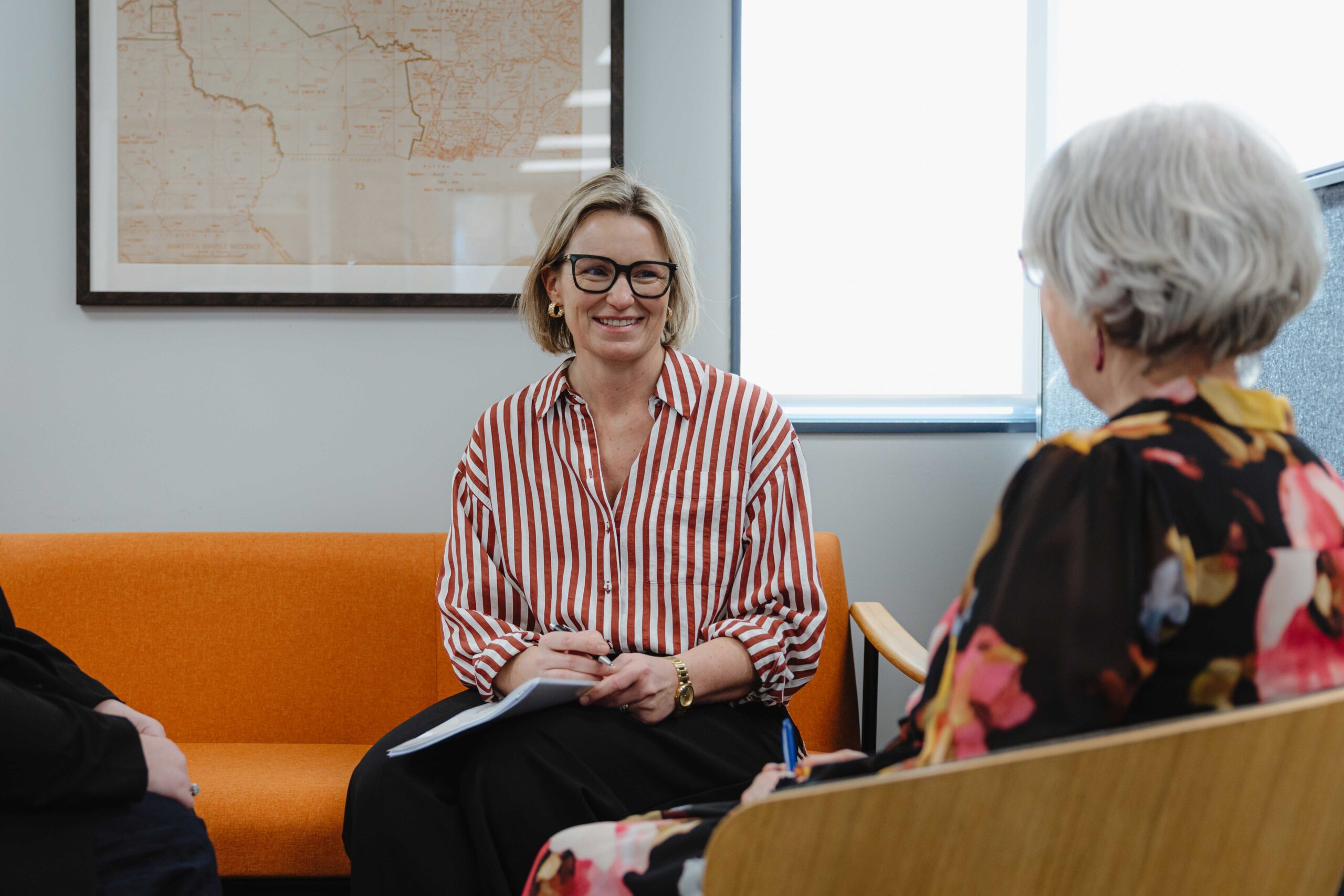

Director
Damandeep Sadhra
Family Law | Relationship Property | Estate Claims | Alternative Dispute Resolution
About Damandeep Sadhra
Damandeep is our newest Director and leads our family law and relationship property team. Widely respected for her expertise across relationship property, care of children matters, contracting out agreements, and complex family disputes, she brings over 15 years’ experience to the firm. Combining technical excellence with empathy, she has practised extensively in family law in both national and regional settings, including a number of years in South Auckland, and plays a key role in mentoring our family law team and developing the firm’s expertise in this area. She is also a Lawyer for Child (L4C), a court appointed role designed to independently represent the child’s interests.
Damandeep holds an LLB from the University of Waikato and completed her Master of Laws with First Class Honours in 2011. She is fluent in English and Punjabi.
Damandeep Sadhra works in the following areas: Family Law | Relationship Property | Estate Claims | Alternative Dispute Resolution

Senior Associate
Charlie Robson
Family Law | Relationship Property | Alternative Dispute Resolution
About Charlie Robson
Charlie has practised relationship property and family law since 2018, after completing a Bachelor of Laws at the University of Canterbury. He joined Bramwell Bate as an Associate in March 2024 on returning home to Hawke’s Bay.
Charlie has been appointed as Lawyer for Child, reflecting the confidence of the Court in his professionalism, judgment, and commitment to achieving positive outcomes for children and young people. In this role, Charlie will independently represent the child’s interests, ensuring their views, welfare, and best interests are appropriately considered throughout the legal process.
Outside work, Charlie is an avid cricketer, having represented Hawke’s Bay and played club cricket in Christchurch, and is involved in community initiatives including Ronald McDonald House and It Takes A Village.
Charlie specialises in:
Charlie Robson works in the following areas: Family Law | Relationship Property | Alternative Dispute Resolution

Solicitor
Bri Thorne
Family Law
About Bri Thorne
Born in Waipawa, and raised in Napier, Bri returned to Hawke’s Bay at the end of 2023 after graduating from the University of Auckland with a Bachelor of Laws. Prior to Auckland, Bri spent four years in New York at St. Thomas Aquinas College completing a Bachelor of Science with a Double Major in Psychology and Criminal Justice. Outside of work, she is a qualified personal trainer who also enjoys playing hockey and keeping active. Bri is happy to be back in Hawke’s Bay closer to friends and family, the fabulous world-renowned wineries, and our famous Hawke’s Bay summers
Bri Thorne works in the following areas: Family Law

Solicitor
Victoria Cole
Family Law
About Victoria Cole
Hailing from Northland, Victoria studied at the University of Auckland, graduating in 2025 with a double degree Bachelor of Laws and Bachelor of Arts. She joined Bramwell Bate in January 2026 and was admitted to the Bar in July 2026 and is now a member of the family team.
Victoria is excited to relocate to Hawke’s Bay and enjoys exploring its beautiful beaches, walks, art deco architecture and farmers markets.
Victoria Cole works in the following areas: Family Law
To get in touch with us, simply fill in the form below and we’ll get right back to you as soon as we are able.
"*" indicates required fields
